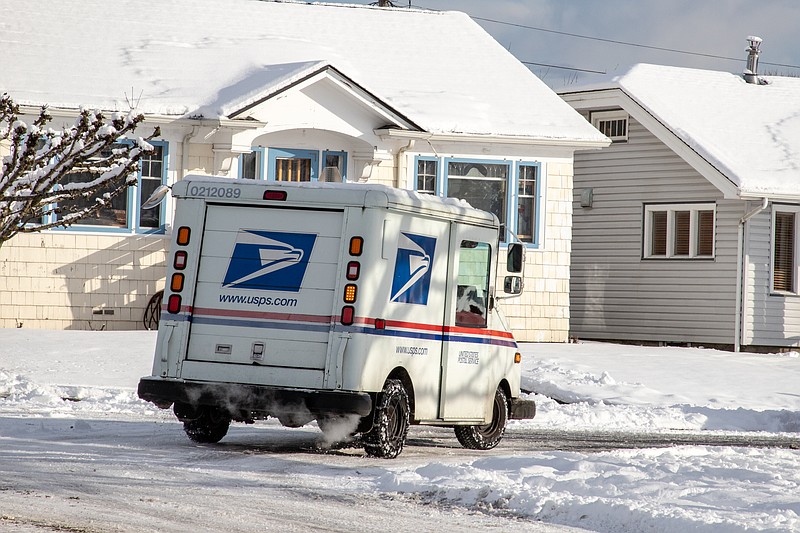
Everett WA. / USA - 02/09/2019: US Postal Service Jeep Delivering Mail During Unusual Winter Snow Storm Cindy Shebley
Like a good many people I purchase a lot of items online and the items are then delivered to my home by either commercial shipping companies or the U.S. Postal Service.
Online purchases being mailed greatly increase during the Holiday season, so many people are receiving emails stating that they are from the U.S. Postal Service.
The Postal Service warns that these emails are fake.
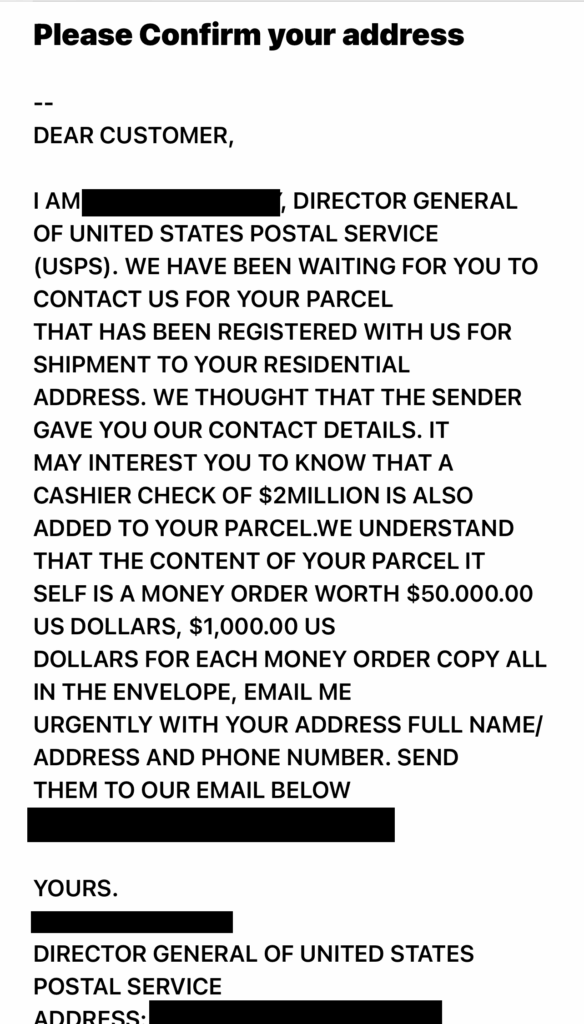
The U.S. Postal Service (USPS) and the U.S. Postal Inspection Service (USPIS) note that they are well aware of the circulation of fake emails/email scams claiming to be from the Postal Service officials, including the Postmaster General.
“Please know USPS officials would never reach out directly to consumers and ask for money or Personal Identifying Information (PII),” the USPS explained.
The Postal Service offers information and tips on how to avoid becoming a victim of fake emails and other kinds of consumer fraud.
“If you ever receive an email about a package delivery or unpaid online postage charges, be careful,” the Postal Service advised. “Some postal customers are receiving bogus emails featuring the subject line, “Delivery Failure Notification.” These emails appear to be from the U.S. Postal Service and include language regarding an unsuccessful attempt to deliver a package.
“The email will prompt you to confirm your personal delivery information by clicking a button or downloading an attachment, that, when opened, can activate a virus and steal information—such as your usernames, passwords, and financial account information. The Postal Inspection Service is working hard to stop these emails and protect your information.”
If you receive an email about a package delivery failure, the Postal Service suggests you forward the email to [email protected], and then delete the email. One should also report non-USPS spam emails to the Federal Trade Commission at www.ftc.gov.
The Postal Service also warns of identity fraud “phishing.”
Did you receive a luring email from the Postal Service about a package delivery? Does it contain a link to click? Don't take the bait! It's a phishing attempt to steal your personal information.
Did you receive an urgent email that requires action? Think before you click! Don't put your personal information at risk. It's probably a phishing attempt.
Did you receive an email from the Postal Service about an attempted or intercepted package delivery? Don’t click on the link! Bogus emails about delivery failures trick customers into clicking links that contain viruses.
The Postal Service also warns that one should not give out personal information via email. The Postal Service states that they do not notify customers of package delivery attempts or request personal information via email.
Poor grammar indicates a fraudulent email, the Postal Service notes. Poor grammar and spelling errors are a good indication that the email is fake. Also be aware that if the email requests “immediate action,” it may be a scam.
The Postal Service also warns of phone calls or voicemail messages from an unfamiliar number claiming to need to verify sensitive personal information. If you receive a call or voicemail, don’t respond. Delete the voicemail. This type of scam is called “vishing.”
“Vishing, short for voice phishing, is an identity fraud scam utilizing a phone call or voicemail,” the Postal Service explained. “Scammers will call or leave a voicemail and impersonate someone they are not, and attempt to elicit sensitive information, like login credentials, personal identifying information, credit card numbers or other banking details. These impostors may pretend to be Postal Inspectors, or other persons in USPS and USPIS positions of authority. They may attempt to coerce you with threats of arrest or some other punishment.”
If you ever receive a phone call or voicemail from an individual claiming to be a Postal Inspector or other law enforcement official- alleging there is an active warrant out for your arrest, the Postal Service warns you to be careful.
“These individuals impersonate law enforcement, or other positions of authority, and will manufacture a threatening situation and sense of urgency in an attempt to coerce you into sending them money and/or providing your personal information to steal your identity. They may claim you are the suspect of a criminal investigation or currently have an outstanding warrant for your arrest. The impostor’s phone number may be blocked or spoofed/fake, displaying a number other than the actual number used by the impostor. “The imposter may even spoof/fake a legitimate number of the person or entity he/she is impersonating. Postal Inspectors will never demand money from you or threaten you with arrest for failing to provide personal information over the phone, text, or email. The U.S. Postal Inspection Service is working hard to stop these impostors.”
The Postal Service and the Postal Inspection Service know that the recent occurrences of mail customers receiving calls from individuals impersonating Postal Service and Postal Inspections Service personnel,
“Please know that Postal Service and Postal Inspection Service inspectors would never reach out directly to consumers and demand money or personal information.”
The Postal Service offers the information below to protect you from this imposter scam.
“If you receive a communication from someone impersonating a Postal Inspector, please send an email to the USPIS Cyber Crime Unit at [email protected]. Please include your name and contact information, the name and any contact information used by the imposter, and a summary of the phone call or copy of the actual communication with the imposter.”
For most of us the holiday season is a time for religious reflection, joy, the exchange of gifts, fellowship, and love of family and friends. The holiday season is also prime time for crooks, scammers, and con artists. So be on guard when receiving emails that look fake.
Delete the emails. Never open the emails and never respond to the emails. Don’t respond by threatening to expose them to law enforcement or scold them for being awful human beings. If you do open the email, don’t call any phone numbers the email asks you to.
Even Santa relies on the Postal Service (his sleigh can only hold so much), so as you receive your online purchases and gifts through the mail, be aware that there are Grinch crooks trying to scam via email.