
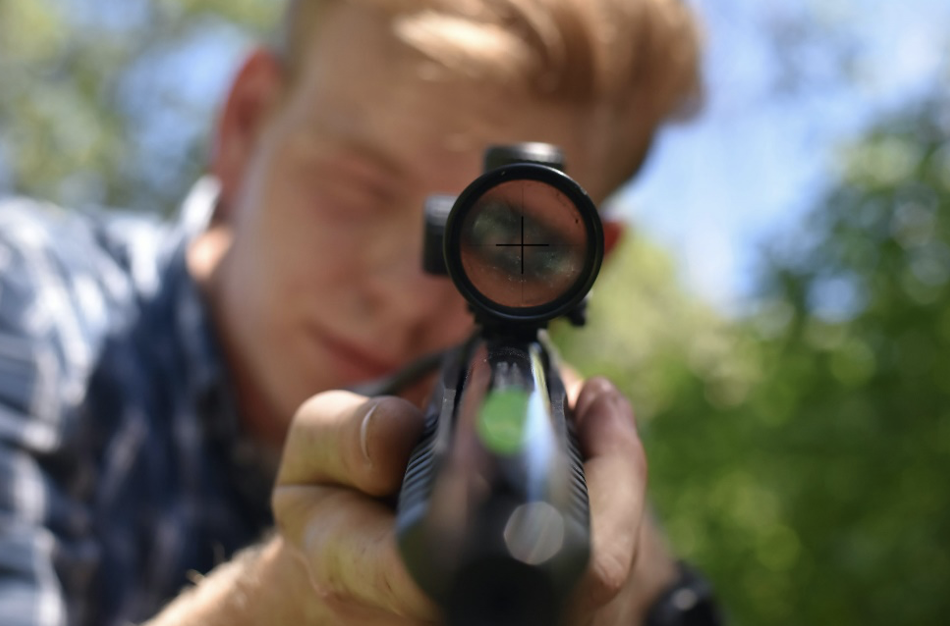
Owning a firearm carries immense responsibility. Whether for personal protection, sport, or professional use, every gun owner must strive to build strong foundational skills to ensure safety, accuracy, and confidence.
Mastering essential shooting techniques not only refines marksmanship but also develops the discipline and awareness necessary to handle firearms responsibly.
Building a Solid Stance and Balance
Every accurate shot begins with a stable foundation. Your stance determines how well you absorb recoil and control your firearm. Two key stances are the Isosceles and the Weaver.
In the Isosceles stance, both arms extend toward the target, forming a triangle with your upper body. Feet are shoulder-width apart with a slight forward lean to manage recoil and maintain balance. This stance offers stability and quick target acquisition.
The Weaver stance places one foot behind the other, with the support arm bent and the strong arm extended. This setup improves recoil control and allows faster recovery between shots.
Mastering Trigger Control and Precision Practice
Trigger control is one of the most vital skills in accurate shooting. Jerking or slapping the trigger can easily pull your sights off target. Instead, focus on a smooth and deliberate trigger press. The trigger should move straight to the rear, using the pad of your index finger rather than the joint. Proper trigger control minimizes muzzle movement, allowing for consistent and accurate shots.
To develop this skill, dry fire practice can be incredibly effective. Dry firing involves practicing trigger presses without live ammunition, allowing shooters to improve muscle memory, sight alignment, and overall control. This method helps eliminate flinching and distractions caused by recoil, letting shooters focus entirely on precision and consistency.
Using a dry fire training system enhances this process by offering realistic feedback and progress tracking, making each session more focused and effective. The best dry fire training system includes realistic trigger reset mechanisms, visual or digital feedback, and progress tracking capabilities.
These elements help ensure that each practice session mirrors live-fire accuracy, making dry fire training a powerful tool for developing confident and precise shooting habits.
Mastering Grip and Recoil Management
A proper grip ensures your firearm remains stable throughout the shooting process. The grip should be firm but not overly tight, as excessive tension can cause unwanted movement and fatigue. The web of your dominant hand should rest high on the backstrap of the firearm, allowing for maximum control. Your support hand should wrap around the dominant hand, with both thumbs pointing forward along the frame.
This grip provides full contact with the firearm, allowing better management of recoil and quicker target reacquisition. A consistent grip also ensures that each shot feels and performs the same, improving accuracy and confidence. Recoil management is not about resisting the backward motion but rather guiding it naturally with your arms and stance.
Understanding Sight Alignment and Sight Picture
Accuracy depends heavily on proper sight alignment. For most handguns, this means aligning the front sight post evenly between the rear sight notches, ensuring the top edges of all sights are level. The target should appear blurry while the front sight remains sharply focused.
A correct sight picture combines proper alignment with precise placement on the target. The focus must remain on the front sight throughout the trigger press, as shifting attention to the target can cause misalignment. With practice, this visual coordination becomes second nature.
Additionally, shooters should learn to control breathing to stabilize aim. A deep breath followed by a gentle exhale before pressing the trigger can help minimize body movement and improve shot consistency.
Practicing Follow-Through and Recovery
Follow-through is often overlooked but is essential to maintaining accuracy. It involves keeping the sights aligned and the trigger pressed to the rear momentarily after each shot. This prevents flinching and ensures a smooth recovery for the next round.
Once the shot breaks, maintain focus on your front sight and allow the firearm to naturally reset. Only after the sights have realigned should you release the trigger to its reset point and prepare for the next shot.
Focusing on Situational Awareness and Safety
Safety is at the heart of responsible shooting. Beyond mastering mechanical techniques, every gun owner must develop situational awareness both on and off the range. Always handle firearms as though they are loaded, ensure the muzzle stays pointed safely away from others, and keep your finger outside the trigger guard until it’s time to fire.
Equally important is understanding your target and what lies beyond it. Being aware of your surroundings ensures that every shot taken is both deliberate and safe. Familiarizing yourself with range commands and etiquette, along with maintaining and inspecting essential AR15 Parts, further reinforces responsible gun handling and respect for others.
Consistency Through Repetition and Training
Skill development in shooting comes from repetition. Regular and structured training helps reinforce good habits and identify areas for improvement. Incorporate both live and dry fire sessions into your routine to maintain proficiency.
Record your sessions to monitor progress, noting changes in accuracy, trigger control, and shot placement. Many experienced shooters recommend setting measurable goals, such as improving group size or reducing reaction time. By maintaining discipline and consistency, these techniques will evolve into second nature.
Developing Confidence Through Mindset and Patience
Shooting is as much a mental exercise as it is physical. Confidence grows through patience, discipline, and continuous learning. Avoid rushing shots or comparing your progress to others. Every shooter develops at their own pace, and improvement often comes gradually through focus and persistence.
Maintaining a calm, focused mindset allows you to stay composed under pressure and make accurate decisions in real-world situations.
The Continuous Path of Mastery
Every gun owner’s journey toward mastery is ongoing. There is always room for refinement and improvement, regardless of experience level. Dedicating time to perfecting these essential shooting techniques ensures that you handle your firearm with skill, precision, and responsibility.
By embracing consistent training, maintaining awareness, and focusing on safety, you cultivate habits that define a competent and disciplined shooter. Ultimately, mastery in shooting is not measured solely by accuracy, but by the control, respect, and mindfulness you bring to every pull of the trigger.