Photo by Greg Gjerdingen via Wikimedia Commons
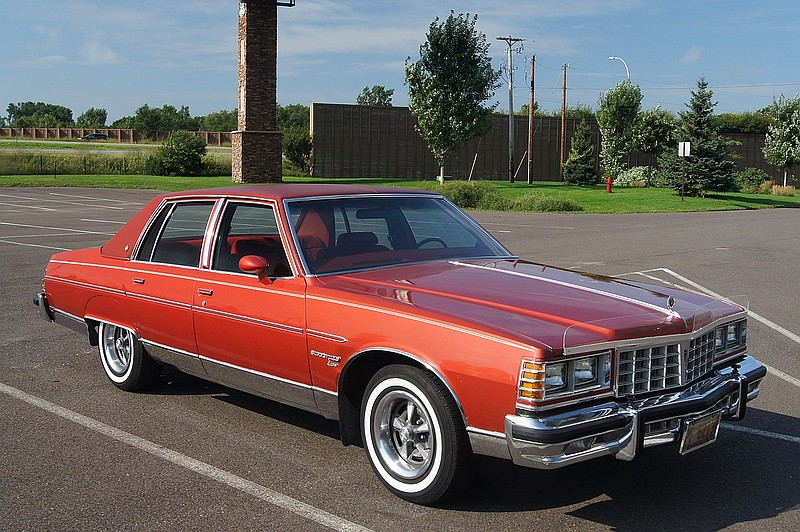
I’ve kept a valid driver’s license for years even though the last car I owned was in 1980. That car, a Pontiac Bonneville, was the size of a Philly Duck boat. When I drove through the city’s narrow streets then I had to be careful not to hit fire hydrants or street signs. When the Bonneville developed chronic mechanical problems and became too costly to maintain, I ditched it in the streets of Germantown. This was not a good move on my part. But live and learn, as they say.
Since then I have never looked back. By that I mean I’ve never had the urge to buy another car even though all around me people buy not one but two and three cars until, frankly, that’s all there seems to be in the city: cars.
Living in the city and owning a car is as incompatible as oil and water. Rare exceptions exist of course, especially if one works in the suburbs or needs a car to visit family in the suburbs. But if 95 percent of your life is centered in the city and public transportation is accessible, owning a car is tantamount to “owning” a series of headaches.
Car owners agonize about scratches, dents, and random acts of vandalism done to their automobiles when they park them on small neighborhood streets. A house with a garage is the ideal setup, but garages now cost almost as much as a house. Insurance costs, gas costs, as well as the disappearance of parking spaces in the city doesn’t make owning a car worth the rare pleasure it affords you when you take it on one of those rare trips to the shore or mountains.
When I first moved to my Old Richmond home my street was a pristine sleepy hollow with multiple parking spaces but today it has become a SUV and truck-lined nightmare. With the addition of new garages and No Parking signs in front of those garages, parking options on the street have been radically reduced. Fishtown and Port Richmond have now become like Center City when it comes to finding a place to park.
Social theorist and writer Paul Goodman (1911-1972) proposed banning cars from midtown Manhattan. Along with his brother, Percival, in 1961 the Goodmans co-authored Utopian Essays and Practical Proposals. In a chapter entitled “Banning cars from Manhattan,” the brothers wrote:
“We propose the banning of all cars from Manhattan Island, except buses, small taxis, vehicles for essential services (doctor, police, sanitation, vans, etc.), and the trucking used in light industry. Present congestion and parking are unworkable, and other proposed solutions are uneconomic, disruptive, unhealthy, nonurban, or impractical.”
They add that “the cars have caused many and increasingly severe evils,” and that “the situation is admittedly critical.”
The Goodman brothers had the right idea although the car and traffic problems they describe have quadrupled since their plan was first proposed. When old cities like New York, Philadelphia, and Boston were built it was mainly with the pedestrian in mind, not oversized automobiles. This is especially true of Philadelphia’s Riverwards, where there are many miniature streets — I call them Tom Thumb passageways — that resemble Elfreth’s Alley, or Camac Street with its wooden cobblestones. Streets like this were not designed for large vehicles or trucks yet that is what they seem to attract. A small street near my home, Albert Street, has been discovered as a handy shortcut to larger streets, despite its ad hoc use as a makeshift playground for kids in the warmer weather.
When I first moved to Old Richmond I noticed that people drove along Albert Street as if they were part of a funeral procession, but now they race through the area as if being chased by the police.
It’s not only Albert Street. Speed freak drivers can be found everywhere. They drive through the Fishtown Crossing Shopping Center parking lot as if they were racing to a fire. Big SUVs with tinted windows, small trucks, and cars of all description make their way through the shopping center parking lot in a never ending procession. Pedestrian walkers there have become accustomed to jumping out of the way when met on all sides from yet another approaching vehicle. Though many drivers who crisscross the lot are mannerly, the zoom-through drivers — the killers — take no prisoners as they race past Pep Boys, make a left angled turn near the IGA grocery store, then swerve to the right near Starbucks only to take another wide angle turn around parked cars and more random walkers.
Talk to any local cyclist and they will tell you how hazardous the traffic is by Aramingo Avenue as it merges into the shopping center. But it’s not easier on the other side of the street, either. Cars there take shortcuts at speeds one should only see on I-95, then pull out onto Aramingo without looking and just missing a smash up with oncoming traffic.
On Girard Avenue, careless drivers yakking on cell phones pull ahead of buses in quick racecar spurts, causing bus drivers to slam on their breaks as passengers jolt forward like stuffed dolls. The bus drivers in turn curse or blast their horns. Mega trucks with tires the size of small cities — and with those awful blackened out windows — race up tiny back streets like Attila the Hun bearing down on a small animal.
Will America’s love affair with the car end? Today, the situation is worse than it was in the early 1960s when the Goodman brothers wrote about banning cars from downtown Manhattan. People today have two, three, and four cars, causing more crowding and congestion.
In California, the car situation reached epidemic proportions long ago. Before her death a decade ago, my sister, who moved to California from Roxborough, said it took her almost two hours to travel seventeen miles on the sluggish LA freeways. The so-called Golden State, she said, is really a tarnished, overcrowded mess.
Today the car has become a kind of home away from home. A significant number of homeless people live in their cars. You also see people sitting in parked cars at all hours of the day or night working their iPhones, texting or just sitting behind the wheel in a kind of automotive trance. They park under bridges at night, sometimes with their headlights on, sitting for hours.
You find these parked cars in the oddest places: in fast food parking lots or on alley streets near Lehigh Avenue. What are these drivers waiting for?
In 1945, the writer Henry Miller of Tropic of Cancer fame wrote a piece for the Rocky Mountain Review entitled "Automotive Passacaglia," in which he describes the ups and downs of a cross country road trip:
“The automobile,” Miller writes, “was invented in order for us to learn how to be patient and gentle with one another…. We American people have always been kind to animals and other creatures of the earth. It’s in our blood. Be kind to your Buick or your Studebaker. God gave us these blessings in order to enrich the automobile manufacturers. He did not mean for us to lose our tempers easily...”
While Miller’s view of cars seems dated and overly romantic, we must return to the Goodman brothers for the ugly truth. There are too many cars in cities and there needs to be a solution, but the solution does not lie in buying additional cars for family members, but cutting back on automotive consumption altogether.
“The advantages of our proposal are very great,” the Goodman brothers wrote. “Important and immediate are the relief of tension, noise, and anxiety; purifying the air of fumes and smog; alleviating the crowding of pedestrians; providing safety for children. Subsequently, and not less importantly, we gain the opportunity of diversifying the gridiron, beautifying the city, and designing a more integrated community life.”