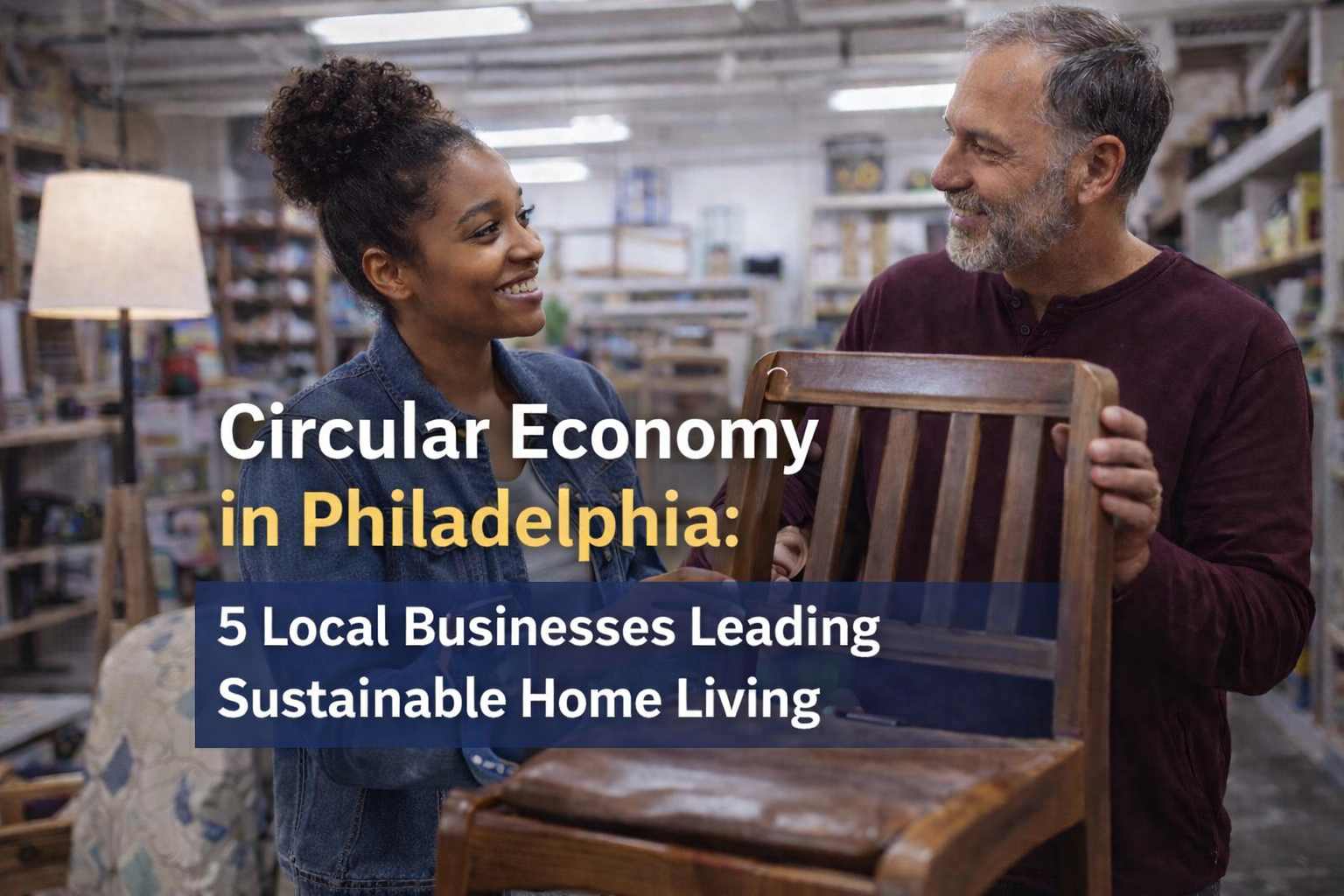
In 2026, buying “used” no longer feels like a compromise. It feels intentional.
Across Philadelphia, South Jersey, and the Delaware Valley, more homeowners are embracing the circular economy — a movement centered on reuse, refurbishment, and keeping quality goods in circulation rather than sending them to landfills.
Read more
This shift is not just about saving money. It is about supporting local businesses, reducing environmental waste, and making smarter long-term choices for our homes and families. Whether you are updating a Fishtown rowhome, renovating a South Jersey rancher, or helping a loved one age safely in place, here are five regional businesses proving that “used” can mean quality, community, and sustainability.
When it comes to larger home infrastructure, buying used requires more than just a good deal — it requires expertise.
All-Star Lifts, based in Warminster, has served the Philadelphia, New Jersey, and Delaware region for more than two decades. The company offers both new and used stairlifts, including certified pre-owned models that are professionally inspected, refurbished, and customized to fit each staircase.
Unlike a secondhand unit purchased through an online marketplace, a certified pre-owned lift installed by a local dealer includes professional stairlift installation, warranty-backed service, and long-term support. That distinction matters, particularly when mobility and safety are involved.
By reconditioning high-quality equipment and reinstalling it responsibly, All-Star Lifts extends the life cycle of durable products while making home accessibility more affordable. It is the circular economy applied to aging in place — practical, sustainable, and community-focused.
If you have never wandered through a Habitat ReStore, prepare to be surprised.
Philadelphia’s ReStore locations are packed with pre-owned furniture, cabinetry, appliances, lighting fixtures, and building materials. Many items are overstock from manufacturers or gently used donations from home improvement projects.
Shoppers regularly discover solid wood furniture, vintage details, and barely-used appliances at a fraction of traditional retail cost. Beyond the savings, every purchase supports Habitat’s mission to build and repair homes for families in need. Shopping here turns renovation into reinvestment — strengthening both your space and your city.
For homeowners drawn to character and craftsmanship, The Resource Exchange is a local treasure.
This Philadelphia-based nonprofit specializes in reclaimed architectural materials and creative salvage. Doors, wood beams, hardware, and fixtures rescued from deconstruction projects find new life in modern homes.
Instead of contributing to construction waste, customers preserve pieces of regional history. The result is design with depth — sustainable and distinctive at the same time.
Sustainability does not always require major renovations. Often, it begins with everyday habits.
Ray’s Reusables in Northern Liberties has built a loyal following around plastic-free living. Customers bring their own containers to refill household staples such as laundry detergent, dish soap, shampoo, and cleaning supplies.
The concept is simple, but the impact is meaningful. Reducing single-use plastic in daily routines keeps waste out of landfills and supports a more responsible consumption cycle.
Small shifts, multiplied across neighborhoods, create lasting change.
Mobility and medical equipment can be expensive — and frequently needed for limited periods of time.
Goodwill’s Home Medical Equipment location in Bellmawr provides sanitized and refurbished items such as walkers, wheelchairs, hospital beds, and other daily living aids. These items are professionally inspected and offered at accessible price points.
For families navigating recovery, caregiving, or long-term mobility needs, this resource offers both affordability and reassurance. It also keeps essential equipment circulating within the community rather than being discarded prematurely.
Philadelphia and its neighboring communities have long valued practicality. From rowhome restorations to neighborhood markets, the region understands how to stretch value without sacrificing quality.
The circular economy simply builds on that tradition. It asks thoughtful questions:
Can this item serve another life?
Can we support a local business instead of a national chain?
Can quality outlast trend cycles?
When residents choose resale, refurbished, or reclaimed goods, they reduce landfill waste, strengthen neighborhood businesses, and keep economic resources within the community.
Often, they also discover craftsmanship that surpasses what is currently mass-produced.
Shopping Local Is an Investment in Community
Whether sourcing reclaimed wood, refilling household essentials, finding refurbished medical equipment, or installing a certified used stairlift, the underlying message remains consistent:
Used does not mean outdated.
It means intentional.
It means sustainable.
It means community-driven.
In a region as resourceful as Philadelphia and the surrounding New Jersey suburbs, smart savings and sustainable living naturally go hand in hand.
The next time you need something for your home, consider starting local — and consider starting circular. Because sometimes the best new addition to your space is something that already carries a story.