For many Pennsylvania veterans and seniors, the greatest barrier to aging safely at home is not a lack of willingness. It is expensive.
A roll-in shower. A professionally installed ramp. Reinforced grab bars. These upgrades dramatically improve safety and independence, yet families often delay them because of the price tag.
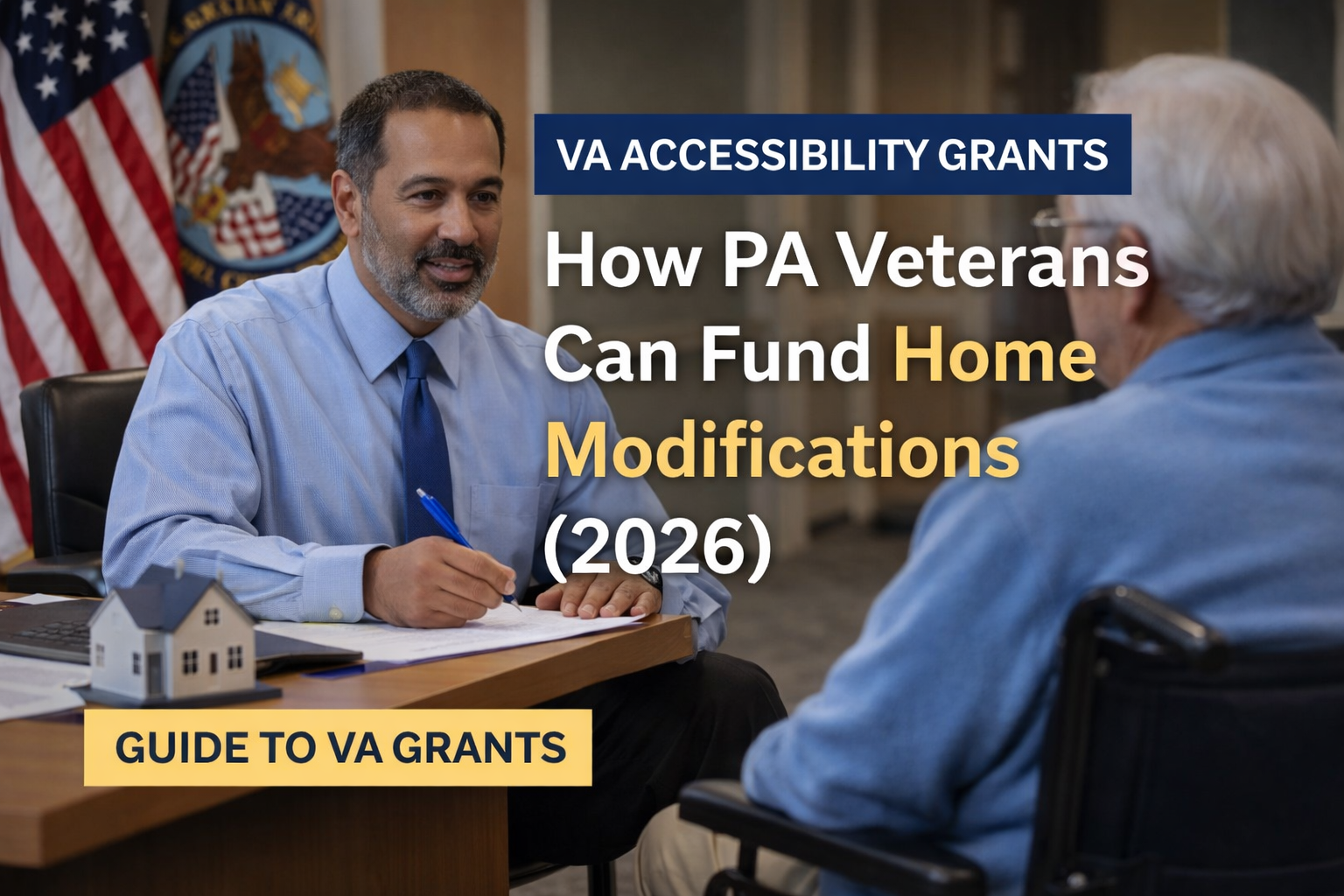
What many homeowners do not realize is this: you may have already earned the funding. In 2026, multiple federal and Pennsylvania programs exist specifically to help veterans and seniors pay for medically necessary home accessibility improvements. The challenge is not availability. It is knowing which grant applies — and how to navigate the process properly.
The U.S. Department of Veterans Affairs continues to offer three major housing-related grant programs in Fiscal Year 2026:
Eligible veterans with certain service-connected disabilities may qualify for up to $126,526 to build, remodel, or adapt a home for accessibility. These funds can be used multiple times (up to six uses) over a lifetime, within the program’s limits.
Veterans with qualifying service-connected conditions may receive up to $25,350 in 2026 to modify an existing home to improve mobility and access.
The HISA grant provides a lifetime benefit of up to:
HISA specifically covers medically necessary structural improvements — such as access to sanitary facilities and essential home areas.
These are not loans. They are earned benefits.
The bathroom is statistically one of the highest fall-risk areas in the home. Because of that, it is frequently the first focus of medically justified home modifications.
Under the HISA program, funding may be approved for:
Professional bathroom modifications are often approved because they directly address safety and access to sanitary facilities — a core eligibility requirement under HISA.
It is important to clarify: HISA does not cover cosmetic upgrades or portable equipment. The modification must be permanent and medically necessary, typically supported by documentation from a VA physician.
Families who submit detailed contractor bids and clear medical justification significantly improve their chances of approval.
Exterior access is just as critical as bathroom safety.
Many homes in Southeastern Pennsylvania have elevated porches, entry steps, or raised garages. Even a single step can eliminate independence for someone using a wheelchair or walker.
While the HISA program does not typically cover portable ramps, permanent structural access improvements may be covered under SAH or SHA grants when tied to a qualifying service-connected disability.
Professionally installed wheelchair ramps may qualify when:
For eligible veterans, SAH funding may cover substantial structural modifications — including ramps — when properly documented.
The key is proper classification. Temporary solutions rarely qualify. Permanent structural accessibility often does.
Not every senior qualifies for VA benefits, but Pennsylvania residents still have potential funding pathways. The PA OPTIONS Program helps older adults access in-home support services and may assist with certain accessibility improvements tied to safety.
Community HealthChoices (CHC), Pennsylvania’s Medicaid-managed long-term services program, may cover medically necessary home modifications for qualifying individuals who meet financial and clinical criteria.
Each program has specific eligibility guidelines and documentation requirements. Families should review qualifications carefully rather than assuming they do not qualify.
One of the most common reasons grant applications are delayed or denied is incomplete documentation.
Grant reviewers require:
Since 1965, Stair Ride Co. has worked with families throughout Pennsylvania and New Jersey to assess homes and provide professionally documented accessibility installation plans. Their long-standing experience in the region reflects an important reality: mobility upgrades must be measured, specified, and installed correctly to meet safety and funding requirements.
Instead of asking, “Can we afford this?” many families should be asking, “Which program covers this?”
Veterans earned these benefits through service. Seniors contributed decades to their communities and may qualify for state-supported assistance.
Home modifications are not luxury renovations. They are preventive safety measures.
When funded correctly, they reduce fall risk, prevent hospitalizations, and extend independence.
If you are a veteran or senior in Pennsylvania wondering how to begin, start with a professional assessment focused on funding eligibility.
A grant-ready evaluation can help you identify:
Navigating accessibility grants can feel overwhelming. But with the right guidance, it becomes manageable. You earned the right to live safely at home. Now it is time to use the benefits designed to help you do exactly that.