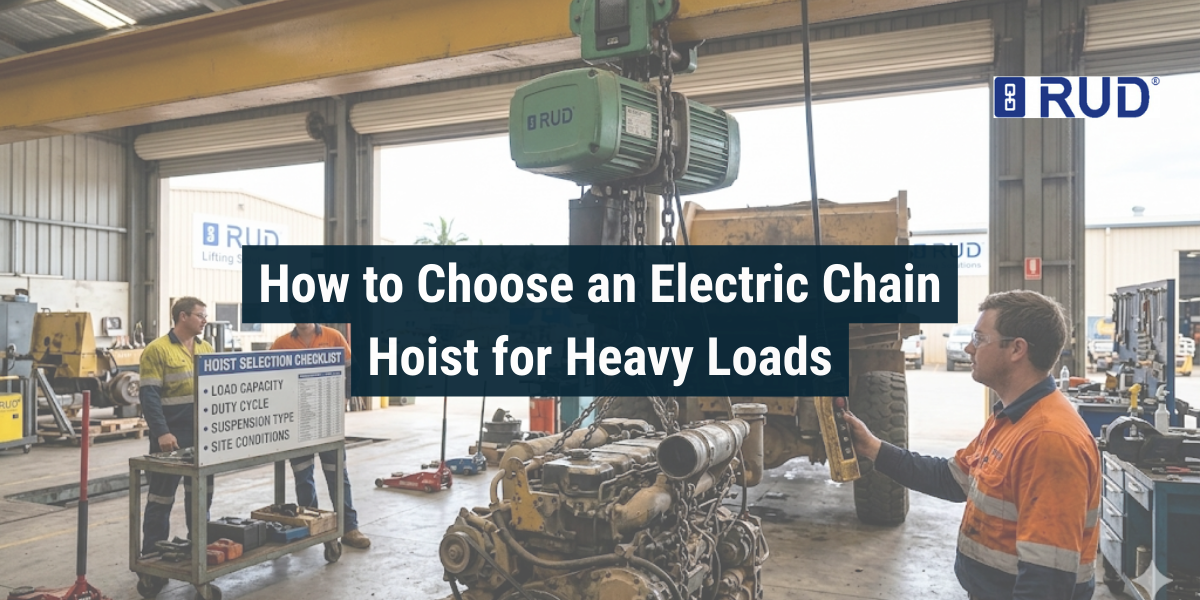
Choosing an electric chain hoist for heavy loads means working through four specs in order: load capacity first, then duty cycle, suspension type, and site conditions. If you get that sequence right, the decision becomes a lot clearer.
Skip any one of those specs, though, and you're dealing with equipment failure, compliance headaches, and costly downtime. It’s a pattern we regularly see across mining operations in Queensland and heavy-vehicle workshops in Brisbane.
That's where experience counts. At RUD, we've spent over 140 years helping Australian teams source the right hoists and lifting solutions for demanding jobs. This guide covers every spec you need to check before buying, so nothing gets missed.
Let's start with the basics.
An electric chain hoist is a motor-powered device that lifts and lowers heavy loads using a chain. You'll find them across warehouses, workshops, and construction sites throughout Australia, and for good reason. They're faster and far less physically demanding than manual alternatives.
To get the most out of one, though, you need to understand what's working inside it. Most people skip straight to price. That's usually where the trouble starts.
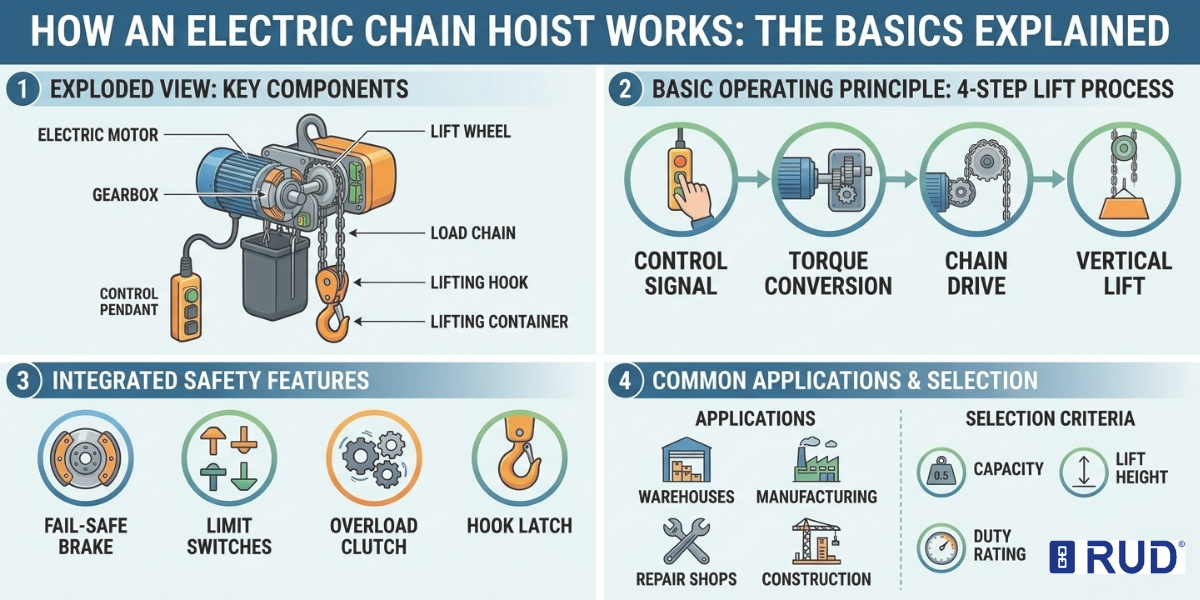
Two parts do most of the heavy work, and both are worth knowing about.
The electric motor converts power into mechanical force. That force runs through the gearbox, which reduces the motor's speed and increases torque. The result is the slow, controlled movement your hoist needs to lift heavy loads without straining the system.
The brake holds the load securely the moment the motor stops. On a busy site, power cuts happen, and the brake stops the load from dropping. The load chain runs down to the hook, built from high-strength alloy steel. It's designed to hold at full capacity.
The components give you reliability. But it's the load rating that keeps your team safe on the job.
SWL, or Safe Working Load, is the maximum load your chain hoist can safely lift. It's not a suggestion, it's a hard limit. After years of working with mining and infrastructure teams, underrated hoists are the most common compliance issue we see.
So before you buy, check these:
Get the load capacity right, and everything else follows. Once that's locked in, the next decision is whether an electric hoist or a chain block suits your operation.
The difference comes down to how often you lift and how heavy those loads are. The chain is common to both, but a chain block needs an operator to pull it, while an electric hoist drives the chain with a motor.
Here's how they compare:
The table shows the specs. What it doesn't show is how that difference plays out on a real site. Electric hoists handle high-volume lifting with far less physical effort, which means fewer breaks, faster turnaround, and more consistent output across a full shift. The wrong tool for the job always finds a way to make itself known.
Well, the tool choice is settled. Now it's time to look at how your hoist performs on site.
Duty cycle, lift height, and lifting speed don't get much attention during the buying process. But they directly determine how your hoist holds up under real working conditions.
Believe it or not, duty cycle is the spec most buyers skip over, and it's usually the first thing that causes problems. Simply put, it tells you how long a hoist can run before the motor needs to cool down. Push it beyond, and an unplanned shutdown is almost guaranteed.
For a full breakdown of classifications, KRC Cranes covers duty cycle service types that are worth reviewing before you commit.
Lift height is equally worth checking upfront. It determines the chain length your setup needs, so if you get it wrong, your hoist either can't reach the load or runs out of chain mid-operation.
Lifting speed ties directly into this, affecting how precisely your team can position a load. This happens particularly in heavy vehicle applications where accuracy is non-negotiable.
Once these specs are confirmed, the focus shifts to how your hoist gets mounted.
A chain is only as strong as its weakest link, and on many sites, that weak link is the suspension type. Choose the wrong one, and your hoist ends up either too rigid for the job or too unstable to operate safely under load.
Both options have their place, and the right one depends entirely on your site.
Hook suspension is fast to set up and easy to relocate. No permanent fixing is required, which makes it ideal for portable or temporary hoisting setups across different jobs. On the flipside, lug suspension is built for permanent installation, sits closer to the beam, and works well where headroom is limited.
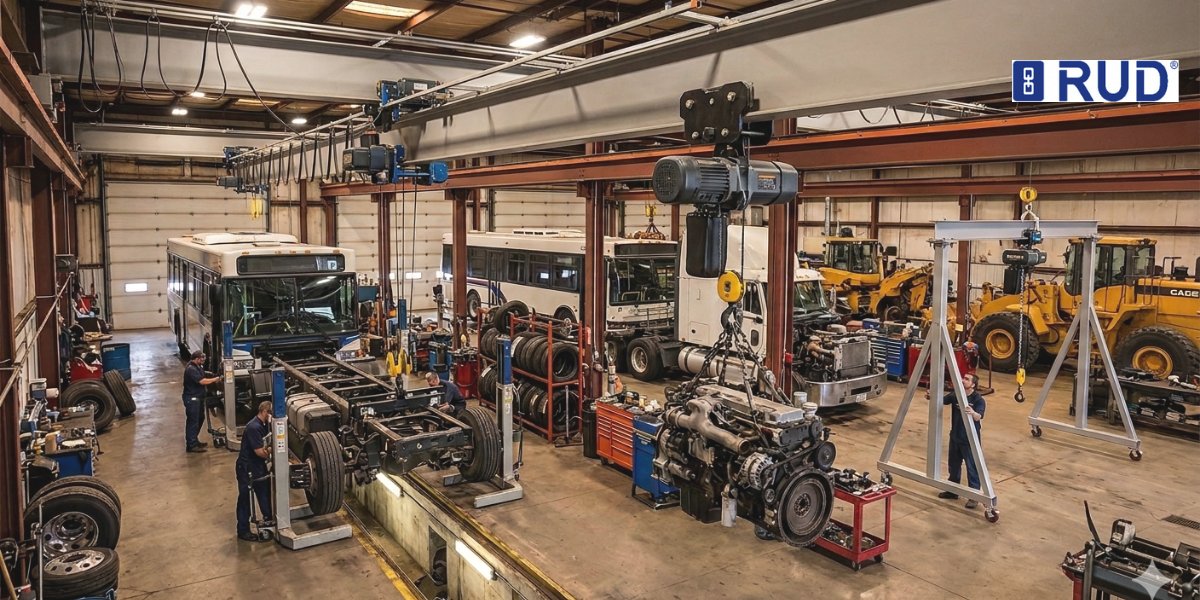
Trolley-mounted hoists run along a load-rated beam, letting your team move loads horizontally across the workspace. That's particularly useful in heavy vehicle workshops, where buses, trucks, and large machinery need to shift position regularly during servicing. A fixed hoist can't accommodate that kind of movement.
The right suspension depends on your site layout, load requirements, and how often your hoist needs to move. With that sorted, safety features are the last major spec to check before buying.
A hoist failure mid-lift is a serious workplace incident. The right safety features stop that from happening. Here's what to check before you buy:
But wait, there's more to compliance than ticking boxes. On Australian worksites, inspections are taken seriously, and a non-compliant hoist puts both your operation and your crew at risk.
With safety features confirmed, the last step is matching your hoist to your site conditions.
As we mentioned earlier, the right electric chain hoist decision comes down to four specs. Get them right, and your lifting setup runs safely and efficiently for years. However, one missed spec can mean downtime, failed audits, and real safety risks on site.
Every spec covered in this guide exists for a reason, and none of them is a bureaucratic checkbox. They're practical decisions that determine whether your hoist performs reliably or lets you down at the worst possible moment.
RUD brings over 140 years of industry knowledge and the largest range of hoists, lifting solutions, and support designed for Australian heavy industry. If you need advice on finding the right hoist for your operation, our team is ready to help.